Kitesurfing is a powerful sport, and that is a big part of its appeal. With good habits and a healthy respect for the wind, it is also a safe one. Whether you have just finished your first course or have been riding for years, these kitesurfing safety tips are worth reviewing before every session.
1. Take proper lessons
The single best safety decision you can make is to learn with qualified instructors. They teach you how to control the kite, use the safety systems and rescue yourself – skills that are hard to pick up from videos. See our kitesurfing lessons in Hurghada.
2. Check the forecast and the spot
Look at the wind speed, gusts and direction before you go, and make sure they suit your level. Our live Hurghada wind forecast shows conditions at our lagoon every 10 minutes. Avoid offshore wind, storms and very gusty conditions.
3. Choose the right kite size
Being overpowered is one of the most common causes of accidents. If you are between sizes, choose the smaller kite. Ask local riders or the rental team if you are unsure.
4. Do a full pre-flight check
- Inspect the kite for damage and check that it is fully inflated.
- Unwind and check the lines for knots, wear and the correct connections.
- Test the quick release on the chicken loop and the safety leash.
- Check your harness, spreader bar and board fins.
5. Launch and land with assistance
Launching and landing are the riskiest moments. Use a trained assistant, keep the kite at the edge of the wind window and make sure there is nobody downwind of you. At our centre, beach assistants help with every launch and landing.
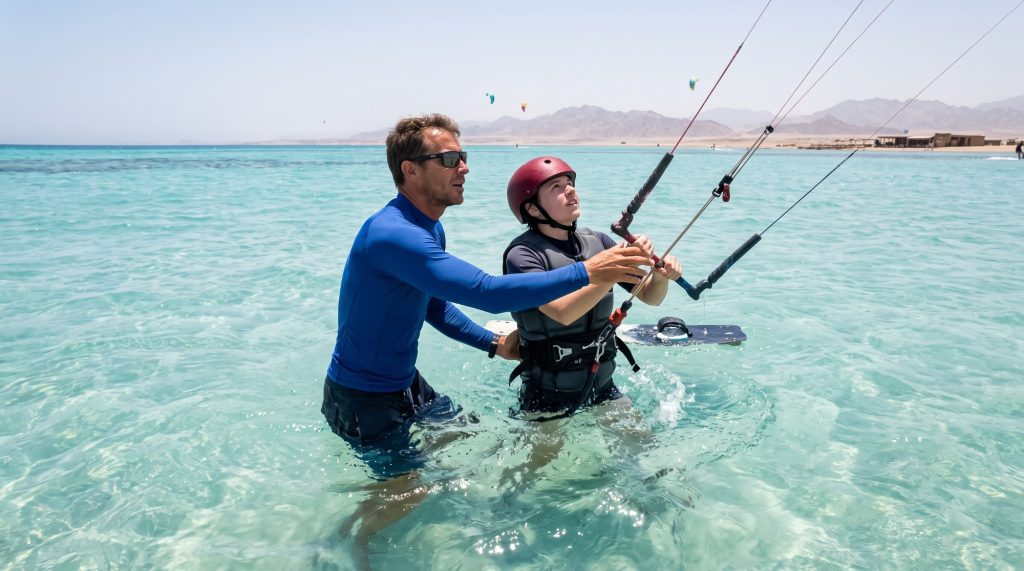
6. Keep clear space downwind
Never set up, launch or ride with people, obstacles or hard surfaces close downwind of you. If something goes wrong, you will be pulled in that direction.
7. Know the right-of-way rules
- The rider coming in from the right (starboard tack) has right of way.
- The upwind rider keeps their kite high; the downwind rider keeps it low.
- A rider heading out from the beach has right of way over a rider coming back in.
- Give beginners, swimmers and boats plenty of room.
8. Never ride alone
Ride where other people – ideally a kite centre or rescue service – can see you, and tell someone when you go out.
9. Practise self-rescue
Know how to release your kite, wind in the lines and pack down in the water. Practise in safe conditions so that you can do it calmly if you ever need to.
10. Wear the right protection
A helmet and an impact or buoyancy vest are strongly recommended, especially while learning. Add a wetsuit suited to the water temperature, neoprene boots on rocky or shallow spots and plenty of sun protection.
11. Respect your limits
Fatigue causes mistakes. Take breaks, drink plenty of water and come in before you are exhausted. Do not try big jumps in shallow water or when the wind is unstable.
12. Look after your equipment
Worn lines, damaged canopies and faulty releases fail at the worst moment. Rinse your gear after every session and repair problems straight away. Our guide to kite equipment care and storage explains how.
Follow these kitesurfing safety tips every time and they will soon become second nature.
Why shallow lagoons are safer
Learning in waist-deep water with a sandy bottom and cross-onshore wind removes many risks: you can stand up, recover your board easily and the wind brings you back towards the beach. That is exactly what our lagoon between Hurghada and El Gouna offers – read more about our flat water kitesurfing.
Kitesurfing safety tips: ride safe, ride more
Safety habits quickly become second nature, and they let you enjoy kitesurfing for years. If you have any questions about conditions or equipment, our team is always happy to help – get in touch.
The British Kitesports Association also publishes helpful safety guidance for riders.