Kitesurfing equipment is a big investment, and the way you look after it decides whether it lasts for two seasons or for many more. Sun, salt, sand and careless packing are the biggest enemies of your gear. This guide covers everyday kite equipment care, long-term storage and how to pack your kit when you travel.
After every session
- Rinse with fresh water. Salt crystals act like sandpaper on cloth and stitching, and sand gets into valves and pulleys. Give your kite, lines, bar, board and harness a good rinse.
- Dry in the shade. Let the kite dry partly inflated in the shade, out of the wind if possible. Never leave a kite flapping on the beach in the sun – UV light and flagging are the fastest ways to wear out the canopy.
- Check for damage. Look for small tears, worn seams, loose fins and frayed lines. Small repairs are quick and cheap; big ones are not.
How to fold a kite properly
Folding your kite well saves time on the beach and lets you pack more efficiently, which greatly reduces wear and tear.
- Open the valves and deflate the leading edge and struts completely. On kites with a one-pump system, make sure the main valve is open so all the air can escape.
- Fold the wingtips towards the centre and roll the kite tightly from both ends towards the middle.
- Keep the leading edge straight as you roll, to stop the bladders from twisting inside.
- Make sure the kite is dry before packing it for more than a day.
Kite equipment care for long-term storage
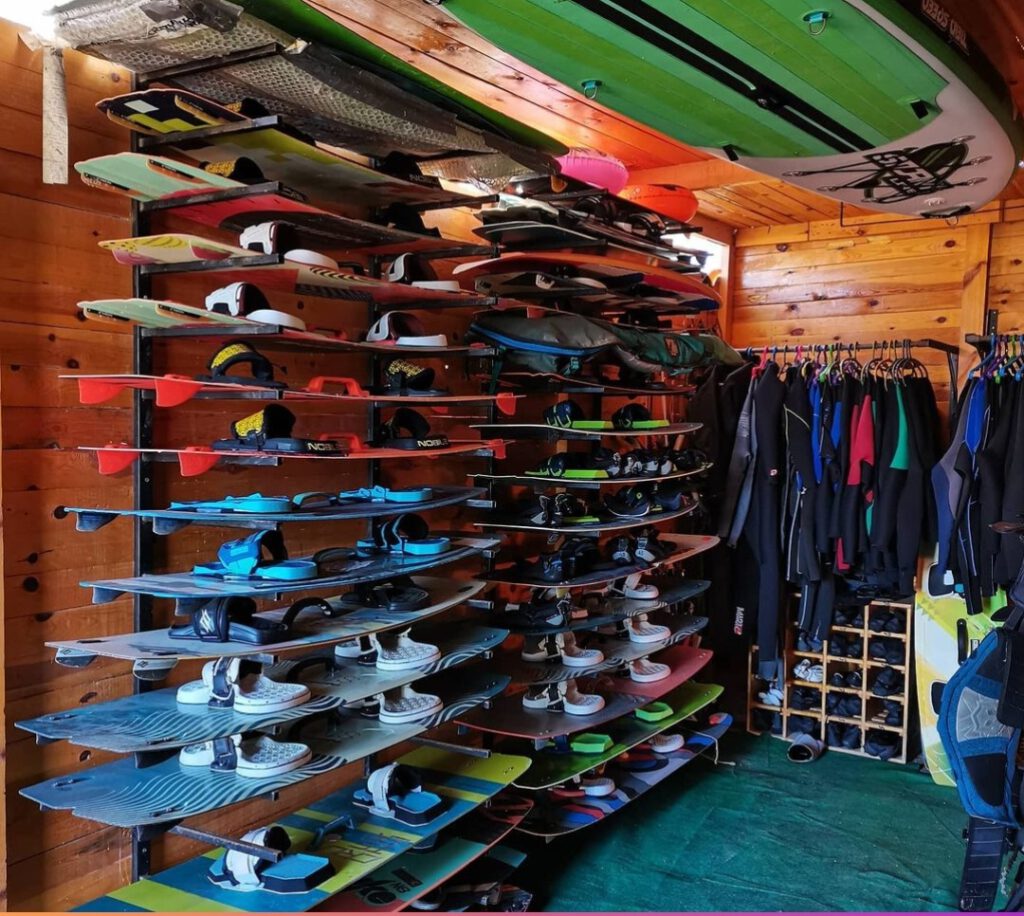
If you will not ride for a while, store your equipment clean, dry and away from heat and direct sunlight. Keep kites loosely rolled in their bag, hang harnesses and wetsuits to dry fully, and store boards flat or on their edge without heavy weights on top. Unwind and check your lines from time to time.
If you ride regularly in Hurghada, the easiest option is to leave your equipment at the beach. Our kite storage in Hurghada includes overnight storage, the daily beach fee, a compressor, beach assistance, showers and fresh water – so your gear stays safe and dry and is always ready for your next ride.
Travelling with kitesurf equipment
Kite bags have become smaller over the years, but a good bag that fits all of your gear – ideally with wheels – is worth its weight in gold. A few tips from riders who travel a lot:
- Remove the fins and pack them separately; they snap easily if your bag is handled roughly. Take off the footstraps and handle too.
- Protect the pump hose – it is the weakest part of the pump. Detach it and pack it where it will not be squashed.
- Keep the small parts together – screws, fins and a screwdriver in a small pouch.
- Pack in the right order: board first to stabilise the bag, then the folded kites, with fins, footstraps and other bits in the gaps.
- Check airline rules for sports equipment before you book.
Every rider ends up with their own system, but these basics will protect your gear on the way to the Red Sea and back.
Good kite equipment care on the road means your gear arrives ready to ride.
Repairs and servicing
Do not ignore small problems. A tiny hole can become a long tear in strong wind, and worn lines can snap at the worst possible moment. Our kite centre offers a repair service for kites and accessories, so a minor problem does not have to end your holiday.
Look after your kite and it will look after you
Good habits take only a few minutes after each session and pay off for years. And if you would rather travel light, our kite rental in Hurghada has well-maintained equipment ready for you on the lagoon.
Always check your manufacturer’s care guide too – Cabrinha, for example, publishes maintenance advice for its kites and bars.